Why Retro Shadow Typography Still Dominates Vintage Branding Projects
If you're building a brand identity that needs to evoke nostalgia, warmth, and authenticity, retro shadow typography for vintage branding projects is one of the most reliable tools in your design arsenal. These fonts do more than look old they carry the visual DNA of entire eras, from 1950s diner signage to 1970s psychedelic posters.
The right shadow font can instantly communicate heritage, craftsmanship, and trust. It removes the burden of over-explaining your brand story through copy alone. When a customer sees those layered, dimensional letters on your packaging or logo, they feel something before they read a single word.
What Exactly Are Vintage Shadow Fonts?
Shadow fonts are typefaces that include a built-in dimensional effect typically a drop shadow, inline shadow, or layered offset giving letters the appearance of depth on a flat surface. In the vintage context, these shadows often mimic the look of hand-lettered signage, woodblock printing, or early offset lithography.
They work best when you need visual weight without visual clutter. Think restaurant menus, craft beer labels, barbershop signage, heritage clothing brands, and boutique hotel collateral. They are less suited for tech startups, medical brands, or any context that demands clinical precision.
The importance lies in instant recognition. Vintage shadow fonts have been culturally associated with authenticity for decades. They signal that a brand values tradition, detail, and personality over sterile minimalism.
How to Match Font Style to Your Brand's Personality
Not every vintage shadow typeface fits every project. Your choice should reflect the specific era, mood, and audience of the brand you're designing for.
Consider the Brand's Era and Vibe
A 1950s Americana brand pairs well with bold, rounded shadow fonts reminiscent of Coca-Cola-era advertising. A 1960s–70s counterculture project calls for psychedelic or Art Nouveau-influenced shadows with flowing, organic curves. Match the font's historical period to the story the brand wants to tell.
Know Your Audience and Medium
Younger audiences respond well to retro shadow typography when it feels ironic or playful think vinyl record shops or indie coffee brands. Older demographics associate these fonts with genuine heritage. Also consider the medium: thick shadow fonts reproduce well on physical packaging, while thinner shadows may lose legibility on small digital screens.
Scale and Application Context
A font that looks stunning on a storefront sign might feel overwhelming on a business card. Test your chosen typeface at every size it will appear. For headlines and logos, go bold with pronounced shadows. For supporting text, use the shadow font sparingly or pair it with a clean sans-serif body font.
Technical Tips to Get the Look Right
Start with these practical adjustments to make retro shadow typography for vintage branding projects feel intentional rather than accidental:
Color separation: Use two-tone or three-tone color schemes for your shadow layers. Avoid pure black shadows try deep burgundy, forest green, or navy instead to keep the vintage feel alive.
Letter spacing: Vintage signage often used tight tracking. Reduce letter spacing slightly, but never sacrifice legibility.
Texture overlays: Apply subtle grain, halftone dots, or paper texture to the entire typographic element. This sells the aged, printed quality that defines vintage design.
Shadow direction consistency: Keep all shadows falling in the same direction across your entire brand system. Inconsistent light sources break the illusion immediately.
Common Mistakes and How to Fix Them
The biggest error is layering too many effects. A shadow font already has built-in dimension adding outer glows, bevels, and gradients on top of it creates visual noise. Step back and strip the design to its essentials.
Another frequent mistake is pairing a vintage shadow font with a modern geometric sans-serif. The contrast feels jarring rather than intentional. Instead, pair it with a transitional serif or a complementary retro sans-serif to maintain period consistency.
Finally, avoid using shadow fonts for long paragraphs. They are display typefaces by nature. Respect their purpose and use them for headlines, logos, and short callouts only.
Your Quick Checklist Before Finalizing
Does the font's era match the brand's story and target audience?
Have you tested readability at the smallest required size?
Are shadow colors complementary rather than default black?
Is the supporting typeface historically and stylistically compatible?
Does the design maintain consistent light direction across all elements?
Have you applied texture to unify the typography with the overall vintage aesthetic?
Would removing any single element improve clarity? If yes, remove it.
Retro shadow typography for vintage branding projects succeeds when every decision serves a clear purpose. Choose deliberately, test honestly, and let the font do what it was designed to do make your brand feel like it has always existed.
 Best Vintage Shadow Fonts for Apparel and Merchandise
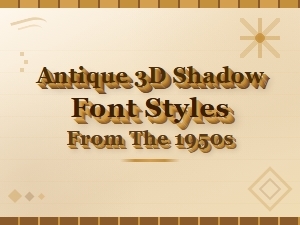 Antique 3d Shadow Font Styles for Vintage Designs
 Distressed Vintage Shadow Typeface with Worn Texture Effect
 Victorian Era Shadow Lettering for Wedding Invitations
 Best Bold Shadow Fonts for Branding That Stand Out
 Free Retro Shadow Fonts for Branding