Why Designers Keep Reaching for D Bold Shadow Typography Styles
If your headlines lack presence and your layouts feel flat, D bold shadow typography styles offer a direct solution. This approach pairs heavyweight letterforms with layered drop or cast shadows, creating depth that standard sans-serifs simply cannot deliver. The result commands attention without relying on color alone.
You do not need complex 3D software to achieve this look. A clear understanding of shadow placement, weight contrast, and spacing is enough to transform ordinary text into a visual anchor point.
What Exactly Defines a Bold Shadow Font Style?
A bold shadow typeface combines two elements: an exaggerated stroke weight and an integrated or applied shadow layer. The shadow can be hard-edged, soft-blurred, or offset at a specific angle. Together, these features simulate dimension and make letterforms appear lifted from the surface.
This style works exceptionally well in poster design, brand logos, hero banners, album covers, and packaging headers. It thrives in contexts where text must function as both information and imagery simultaneously.
The importance lies in hierarchy. Bold shadow typography naturally sits at the top of the visual order, guiding the viewer's eye exactly where you intend.
How to Match Shadow Typography to Your Project
Consider Your Brand Personality
A streetwear label benefits from rough, offset shadows with high contrast. A luxury brand may prefer subtle, evenly spread shadows with refined kerning. Define the emotional tone before selecting a shadow style.
Evaluate the Medium
Digital screens render soft shadows cleanly, but print reproduction demands higher precision. For screen-based projects, glow and blur effects scale well. For offset printing, hard geometric shadows reproduce more reliably across substrates.
Audience and Context
Event posters for concerts or sports tolerate maximalist, stacked shadow layers. Corporate presentations require restraint a single, tightly controlled shadow at two to four pixels of offset usually suffices.
Technical Tips to Get It Right
Shadow direction: Keep it consistent across all text elements. Mixing angles creates visual chaos.
Layer separation: Duplicate your text layer, offset the copy by 4–8 pixels down and to the right, then recolor it darker. This manual method gives you full control.
Kerning after shadowing: Shadows can visually tighten spacing. Always revisit tracking once the effect is applied.
Color pairing: Use a shadow color derived from your background, not pure black. A darkened version of the background hue feels more cohesive.
Common Mistakes and How to Fix Them
Over-blurring the shadow makes text look out of focus rather than dimensional. Reduce blur radius and increase opacity instead. Using default drop shadows without manual adjustment produces generic results. Always tweak angle, distance, and spread independently.
Another frequent error is applying bold shadows to body text. This style is built for display and headline use only. At small sizes, the shadow merges with the letterform and destroys legibility.
If your design already carries heavy visual elements, dial back the shadow intensity. Bold does not mean competing with every other component on the page.
Your Quick-Start Checklist
Define the purpose of your typography attention, hierarchy, or mood.
Select a bold-weight typeface as the base.
Choose a shadow style: hard offset, soft cast, or stacked layers.
Set a consistent shadow angle across the entire layout.
Test readability at the intended viewing distance or screen size.
Print or export a proof before finalizing.
D bold shadow typography styles are not a passing trend they are a functional design tool. Apply them with intention, and your text will carry the visual weight your projects demand.
 Best Bold Shadow Fonts for Branding That Stand Out
 Retro Bold Shadow Font Pairing Guide for Stunning Designs
 Bold Shadow Fonts for Stunning Poster Designs
 Bold Shadow Fonts vs Regular Drop Shadow Fonts: Key Differences Explained
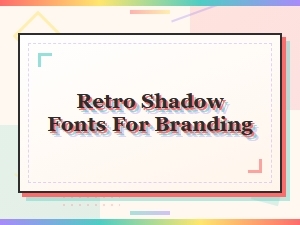 Free Retro Shadow Fonts for Branding
 Best Free Shadow Fonts for Logo Design